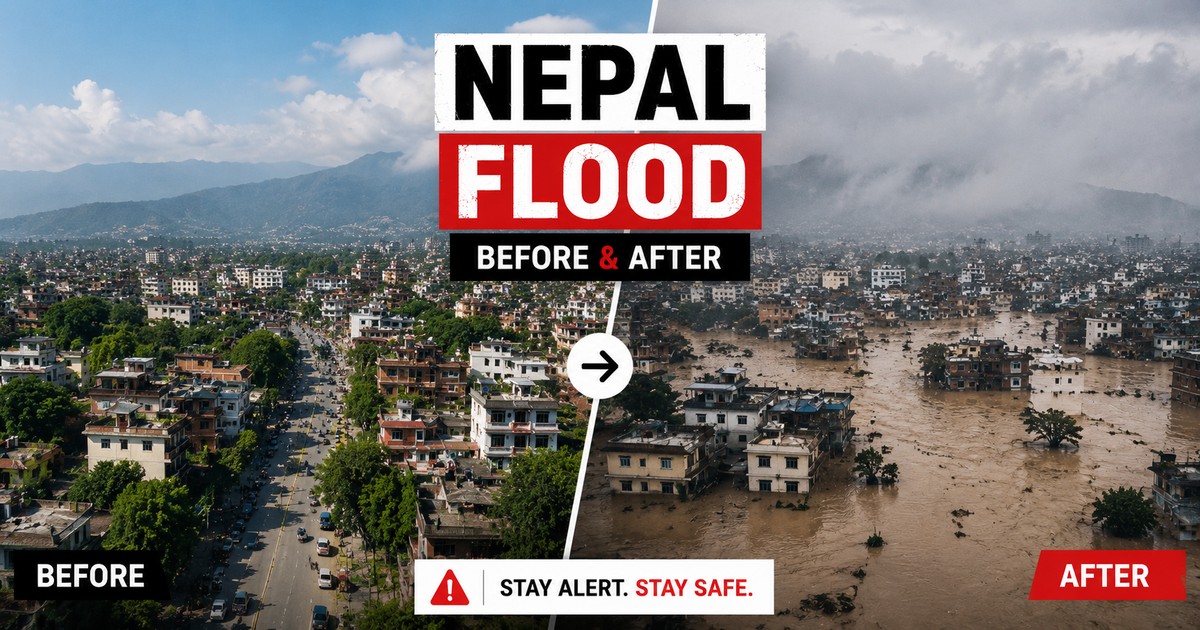
Nepal Floods 2026: Devastating Flash Flood Leaves Hundreds Dead or Missing
Nepal is facing one of its most devastating natural disasters in recent years after a catastrophic flash flood struck the country's northern Himalayan region near the Nepal–China border.
The disaster struck on August 26, 2026, when a massive surge of water, mud and debris swept through communities in Nepal's Rasuwa district, destroying homes, roads, bridges and critical infrastructure. Rescue teams are continuing to search for survivors and people still missing.
What Caused the Nepal Flood?
Early reports initially raised concerns about an earthquake, but subsequent analysis indicated that the disaster was linked to a glacial collapse and an ice-and-rock avalanche in the Himalayan region.
The collapse sent a huge amount of rock, ice and debris into the river system, producing an exceptionally powerful flood that rapidly moved downstream. Experts say accelerated glacier melting and changing Himalayan conditions may be contributing to increasing risks from such events.
The sudden nature of the event left people with very little time to escape.
Rasuwa and Bhote Koshi Hit Hard
The Bhote Koshi River and surrounding valleys were among the worst affected areas.
Communities including Timure and nearby settlements in Rasuwa suffered extensive destruction. Videos from the area showed floodwaters carrying vehicles, buildings and other structures downstream.
Roads and bridges were destroyed, making it extremely difficult for rescue teams to reach isolated communities. Critical infrastructure, including power facilities, was also damaged.
Death Toll and Missing People
The scale of the disaster has continued to change as rescuers reach previously inaccessible areas.
As of August 27, reports indicated that more than 165 people had died, while roughly 1,500 people were reported missing across Nepal and Tibet, although figures remain fluid as authorities continue identification and rescue operations.
The missing include both local residents and foreign nationals.
A particularly worrying aspect of the disaster is the number of tourists and pilgrims who were in the region. The area is used by travelers heading toward Mount Kailash and Manasarovar, making international nationals part of the ongoing search effort.
Infrastructure Destroyed
The flood did not only affect homes and villages.
Reports indicate severe damage to:
-
Roads and highways
-
Bridges
-
Hydropower infrastructure
-
Border facilities
-
Vehicles
-
Homes and businesses
-
Electricity infrastructure
-
Communication and transportation links
The destruction of roads has significantly complicated rescue operations because some affected areas can no longer be reached easily by conventional vehicles.
Rescue Operations Underway
Nepal has deployed thousands of security personnel, including police and military forces, for search-and-rescue operations.
Helicopters are being used to reach isolated areas, evacuate survivors and deliver emergency supplies. However, damaged infrastructure, unstable terrain, heavy sediment and continuing rainfall are making the operation extremely difficult.
Authorities are also coordinating with neighboring countries and international organizations as they attempt to locate missing foreign nationals and provide humanitarian assistance.
Foreign Tourists Among the Missing
The disaster has created an international emergency because the affected region is an important route for travelers and pilgrims.
Reports indicate that hundreds of foreign nationals may be among those missing. India has been particularly affected, with Indian citizens reported among the missing travelers. Other nationalities have also been identified in reports from authorities and international organizations.
Families across several countries are waiting for information about relatives who were traveling through the region when the flood occurred.
Why Himalayan Floods Can Be So Dangerous
Nepal's geography makes the country particularly vulnerable to sudden floods and landslides.
Its steep Himalayan valleys mean that water and debris can move downhill extremely quickly. When a glacier, landslide or temporary natural dam suddenly releases a large volume of water, the resulting flood can become much more destructive than a conventional river flood.
Climate change is also an important concern. Researchers have warned that Himalayan glaciers are experiencing significant changes, potentially increasing the risk of glacial lake outburst floods, avalanches and other hazards in vulnerable mountain regions.
A Warning for the Future
The Nepal disaster highlights the growing importance of early-warning systems and Himalayan disaster monitoring.
Better monitoring of glaciers, rivers and unstable mountain slopes could provide communities with valuable minutes—or potentially longer—to evacuate before a catastrophic event reaches downstream settlements.
Experts have also emphasized the importance of resilient infrastructure, emergency communication systems and evacuation planning in mountain communities.
Nepal Floods 2026: What Happens Next?
The immediate priority remains saving lives and finding missing people.
Rescue teams are expected to continue searching affected valleys while authorities assess the full extent of the damage. Because some areas remain difficult to access, the final death toll and economic losses could change significantly as rescue operations progress.
The disaster also raises broader questions about how Nepal and other Himalayan countries can prepare for increasingly dangerous combinations of glacier instability, extreme rainfall and landslides.
Final Thoughts
The August 2026 Nepal floods are a tragic reminder of how quickly a Himalayan natural hazard can turn into a major humanitarian disaster.
What began as a sudden glacial collapse and debris surge resulted in devastating flooding across valleys near the Nepal–China border, destroying communities and infrastructure and leaving hundreds—or potentially more than a thousand—people missing.
For now, the focus remains on rescue, recovery and locating those who are still unaccounted for.
As authorities investigate what triggered the event and assess the damage, the disaster is likely to become another major warning about the growing risks facing communities living in the rapidly changing Himalayan environment.



Comments (0)
Be the first to comment!