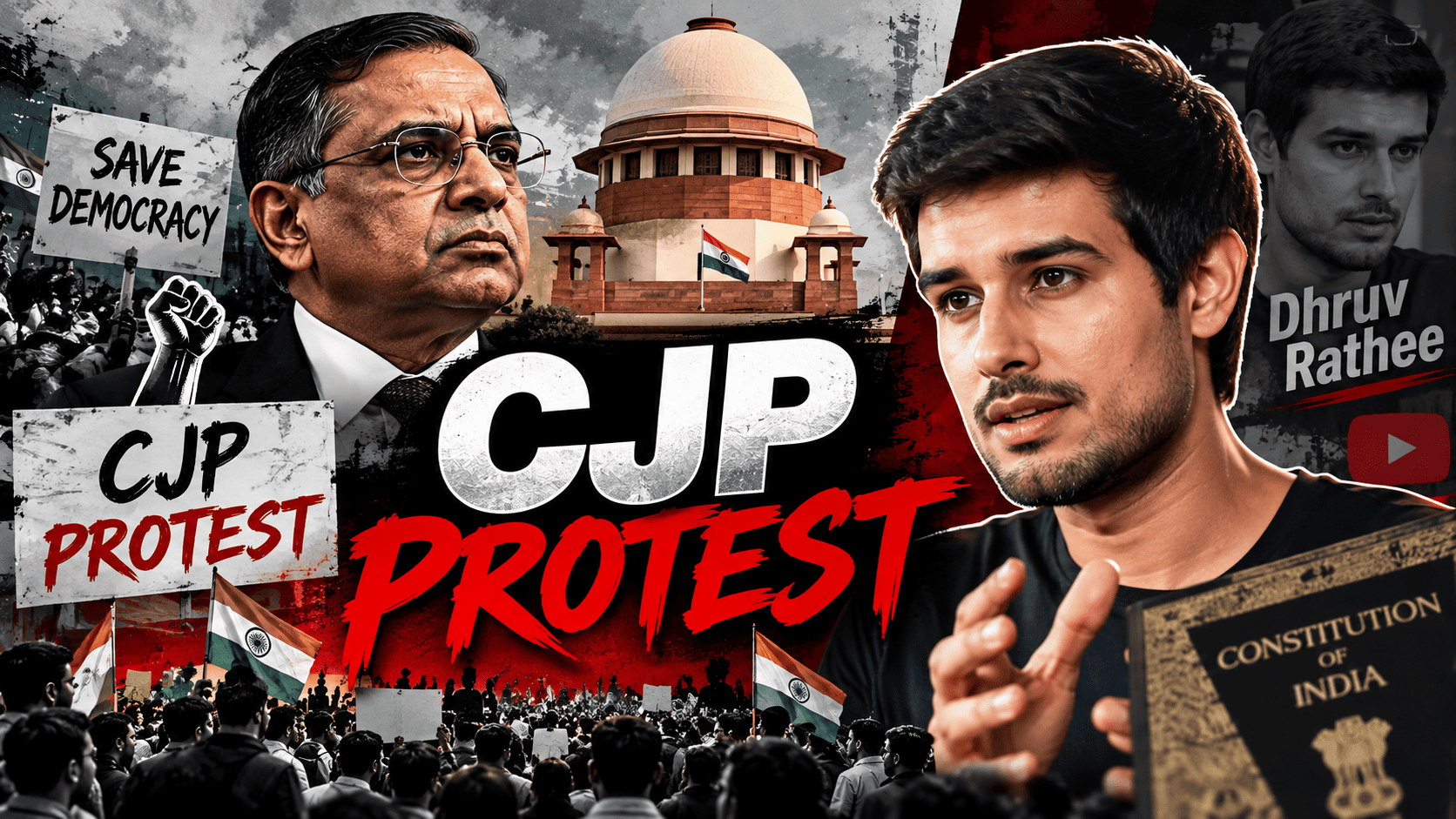
CJP Protest and Dhruv Rathee: What Happened in Bengaluru and What the SIR Row Is About
Published: October 8, 2026
A political protest in Bengaluru on October 8, 2026, drew significant attention after YouTuber and political commentator Dhruv Rathee joined the Cockroach Janta Party (CJP) and actor-activist Prakash Raj at Freedom Park.
The protest focused on the Election Commission of India’s Special Intensive Revision (SIR) of electoral rolls and included demands for the resignation of Chief Election Commissioner Gyanesh Kumar. Protesters also called for changes to, or the scrapping of, the SIR exercise.
The event has generated considerable discussion online, but several different claims surrounding the protest need to be separated from the facts that can be independently established.
What Is the CJP?
The Cockroach Janta Party (CJP) is a youth-oriented political organisation led by founder Abhijeet Dipke. The organisation has recently organised protests over issues including electoral rolls and the functioning of public institutions.
Earlier in October, CJP held a protest in Mumbai as part of a broader campaign concerning the SIR process. Reuters reported that the organisation was demanding the resignation of Chief Election Commissioner Gyanesh Kumar and accusing the Election Commission of improperly removing eligible voters. The Election Commission and the BJP have rejected allegations of political manipulation.
What Happened in Bengaluru?
On October 8, CJP organised a demonstration at Freedom Park in Bengaluru under the banner of a "People's Tribunal."
According to reports, protesters included students, women and other participants who said they had concerns about voter-list revisions. The event included speeches, slogans and displays concerning alleged voter deletions.
The organisers demanded that the SIR exercise be scrapped and called for the resignation of Gyanesh Kumar.
The protest was also associated with a planned "Chappal Protest", which organisers described as an expression of solidarity with women.
Why Is the SIR Process Controversial?
Special Intensive Revision, or SIR, is a process used by the Election Commission to revise electoral rolls.
The Election Commission says the purpose is to maintain accurate voter lists and identify entries involving deaths, permanent migration, duplicate registrations and people who cannot be located despite repeated verification attempts.
According to information published through the government, the process includes house-to-house enumeration, draft electoral rolls, a claims-and-objections period and opportunities for appeals.
The Election Commission has also said that safeguards are intended to prevent eligible voters from being wrongly removed, including multiple attempts by Booth Level Officers, publication of draft rolls and opportunities to submit Forms 6, 7 and 8.
However, the process has become politically contentious because of the scale of voter-roll changes and concerns raised about transparency and possible wrongful exclusions.
An investigation by The Indian Express reported that more than 13 crore names had been struck from draft electoral rolls across 30 states and Union territories during the nationwide SIR exercise. The same report said two Election Commissioners had formally raised objections to aspects of the process on multiple occasions. These are reported findings and objections, rather than proof that all deleted names were wrongly removed.
Dhruv Rathee Joins the Protest
Dhruv Rathee's participation became one of the most widely discussed aspects of the Bengaluru demonstration.
Rathee had announced his participation before the event and subsequently appeared at Freedom Park alongside CJP founder Abhijeet Dipke and Prakash Raj.
During his speech, Rathee said that he had not come to the protest for "regime change." He criticised the Election Commission over what he described as a lack of transparency and accountability in the SIR process.
His participation is significant because Rathee has a large online audience and frequently comments on Indian politics and public policy. His appearance therefore gave the protest additional visibility on social media.
Importantly, his statements at the protest represent his political views and allegations, rather than independent findings establishing wrongdoing by the Election Commission.
What Are Protesters Alleging?
The protesters and organisers have raised several concerns about the SIR process.
These include:
-
Alleged wrongful deletion of eligible voters.
-
Concerns about transparency in the revision process.
-
Demands for greater accountability from the Election Commission.
-
A demand for the resignation of Chief Election Commissioner Gyanesh Kumar.
-
A demand to stop or substantially change the current SIR exercise.
Prakash Raj, who also attended the demonstration, argued that the issue went beyond the deletion of names and concerned citizens' voting rights and dignity.
These claims should be distinguished from established facts about the SIR procedure. The Election Commission maintains that the exercise has safeguards designed to protect eligible voters and remove only ineligible or duplicate entries after verification.
Has the Election Commission Declared the SIR Illegal?
No.
The government's published account of the Supreme Court's May 27, 2026 judgment in Association for Democratic Reforms & Ors. v. Election Commission of India & Ors. states that the Court held the SIR exercise to be within the Election Commission's statutory mandate and consistent with its constitutional responsibilities under Article 324.
That does not mean every individual decision made during an electoral-roll revision is beyond challenge. Electoral-roll entries can still be questioned through the claims, objections and appeal mechanisms provided under the electoral framework.
Why the Protest Matters
The Bengaluru protest illustrates a wider political dispute over how voter rolls should be maintained and how much transparency the Election Commission should provide during large-scale revisions.
There are therefore two separate questions:
First: Does the Election Commission have legal authority to conduct an SIR?
Available government material says that it does.
Second: Were individual eligible voters wrongly excluded, and was the process implemented transparently and correctly in every case?
That question requires examination of electoral-roll data, individual cases, objections, appeals and official responses rather than simply relying on statements from either protesters or their opponents.
CJP's Wider Protest Campaign
The Bengaluru event was not an isolated demonstration. CJP has been organising protests in different cities and has announced further mobilisation.
Reports indicate that the organisation planned another major demonstration at Jantar Mantar in New Delhi on October 10, continuing its campaign concerning the Election Commission and SIR.
The participation of public figures such as Dhruv Rathee and Prakash Raj has increased the visibility of the campaign, while the underlying dispute remains centred on electoral-roll revisions and the Election Commission's handling of the process.
Fact Check: What We Know
| Claim | What the available evidence shows |
|---|---|
| CJP held a protest in Bengaluru | Verified |
| Dhruv Rathee attended | Verified |
| Prakash Raj attended | Verified |
| Protesters demanded Gyanesh Kumar's resignation | Verified |
| Protest focused on SIR | Verified |
| Protesters alleged wrongful voter deletions | Verified as an allegation |
| ECI says SIR has safeguards against wrongful deletion | Verified |
| Supreme Court has examined the legality of SIR | Verified |
| The Supreme Court declared every disputed deletion valid | Not established |
| The protest itself proves electoral manipulation | Not established |
Conclusion
The October 8 Bengaluru CJP protest brought together a youth political organisation, public figures and citizens concerned about India's electoral-roll revision process. Dhruv Rathee's appearance significantly increased public attention to the demonstration.
The central dispute is the Special Intensive Revision of electoral rolls: protesters argue that the process can result in wrongful exclusion and lacks sufficient transparency, while the Election Commission maintains that SIR is a legally authorised process with verification, claims, objections and appeal safeguards.
For readers trying to understand the controversy, the most important distinction is between documented facts, official positions and political allegations. The presence of Dhruv Rathee or other public figures at the protest does not independently establish the truth or falsity of the claims being debated.
As the SIR process and the protests continue, official electoral-roll data, individual deletion cases, objections, court proceedings and responses from the Election Commission will be more reliable indicators than viral social-media claims alone.



Comments (0)
Be the first to comment!
Leave a Comment